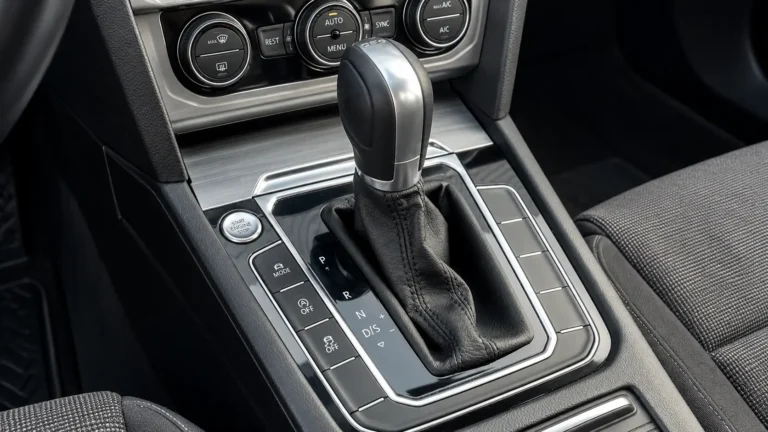













Comfortable driving in traffic jams, quick gear changes and no clutch pressing. For many buyers, the DSG gearbox is a reason to choose a specific used car. However, when inspecting it, it is not enough to find out that the car goes forward and can engage reverse gear. DSG gearbox in a used car, so what is it like?
Some problems only become apparent when parking, starting slowly or after warming up. How to recognize a DSG fault, what to look for during a test drive and when to be careful when buying? We have prepared a practical overview.
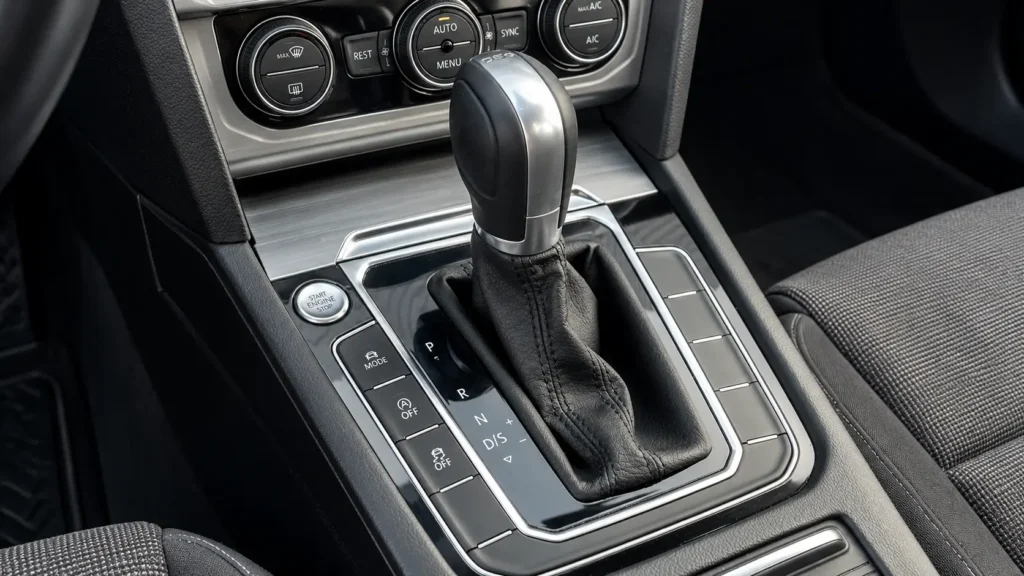
What is DSG and why should you care about its condition?
DSG is an automatic dual-clutch transmission. In simple terms, it uses one clutch for odd gears and the other for even gears. Thanks to the pre-selection of the next gear, it can shift quickly and with a short interruption in power transmission.
Its functioning is ensured by mechanical components, clutches and an electronically controlled control system, known as mechatronics. Therefore, when buying a used car, the behavior of the transmission, as well as its maintenance and previous repairs, matter.
DSG in itself is not a reason to reject the car. What is important is that, What condition is the specific car in?.
DSG gearbox in used cars: not DSG like DSG
There are several designs under the DSG label. Some use dry clutches, others wet clutches. Service requirements and low-speed operation may also vary.
The mere information that a car has a six-speed or seven-speed DSG is therefore not enough to assess its reliability. Similarly, there is no universal oil change interval for all versions. For the buyer, the practical advice is simple: take an interest in documented maintenance, test the car in various situations and do not judge the transmission only by the reputation of the model or the number of speeds.
How to recognize a problem with DSG: The most common warning signs
A healthy transmission should operate smoothly during normal driving, without repeated strong shocks and loss of engagement. A slight perceptible gear change may not indicate a defect. However, significant and repeated problems deserve attention.
Jerking and vibration when starting
When starting off smoothly, check to see if the car engages smoothly. Repeated jerking, shaking, or irregular engagement may indicate a problem. Also watch for these symptoms when parking or backing up slowly. If the dealer claims that „all automatics do this,“ don’t take this as a sufficient explanation for the significant vibrations.
Hurts or significant delay in inclusion
With the car stationary and the brake depressed, try engaging forward and reverse. A short reaction delay can be normal. Repeated strong jolts, unusually long waits for engagement or unreliable engagement are suspicious. There is no single threshold in seconds by which all DSGs can be evaluated. What is important is the overall behavior of the car and the repeatability of the problem.
The revs increase, but the car does not accelerate accordingly
When accelerating, the transmission may downshift and the revs will naturally increase. Another situation occurs when the revs repeatedly jump when the gear is steady, but the car does not accelerate accordingly. This may be a sign of clutch slippage. However, looking at the rev counter alone is not enough to determine the cause.

DSG gearbox in used cars: jerking when shifting and unusual noises
When accelerating and decelerating, watch to see if the transmission shifts without any noticeable kickback or loss of power. Turn off the radio and also listen for any rattling, knocking, or humming noises.
The sound coming from around the gearbox may not be coming directly from it. Similar problems can also be caused by other parts of the drivetrain. For the buyer, this is primarily a signal that more needs to be found out.
Transmission warning or emergency mode
A flashing gear indicator, a fault message, an unavailable reverse gear or a limited range of gears are not minor issues to be overlooked. If an overheating warning or stop signal appears while driving, safely interrupt the test and follow the instructions for the specific vehicle.
The phrase "just delete the error" does not replace finding out why the error occurred.
How to test DSG during a car inspection
A short drive around a parking lot may not show how the transmission will perform in normal use. Allow plenty of time for cold driving even after the car has warmed up.
Before the inspection, ask the seller not to use the car just before your arrival. When inspecting, focus on a few common situations:
- Smooth start: Monitor the smoothness of the engagement without sudden acceleration.
- Driving and parking: Watch for jerking and vibration at low speed.
- Reversing: Experience reliable reverse engagement and smooth movement.
- Normal acceleration and deceleration: Watch for gear changes, jolts, and any loss of engagement.
- Starting after warming up: At the end of the drive, repeat the parking and compare the car's behavior with the beginning of the tour.
Change direction only after coming to a complete stop. Do not hold the car in place with the accelerator on a slope; use the brake according to the manufacturer's instructions. Repeated hard starts are not necessary for normal assessment.

DSG Service History: What to Ask the Dealer for
A used DSG gearbox and low mileage, or the statement "regularly serviced" in themselves, do not confirm proper maintenance of the gearbox. Ask for documents that show what was done, when and at what mileage.
Find out about the prescribed service and possible repairs of clutches, mechatronics or other DSG parts. Service requirements always relate to the specific transmission and vehicle design.
The information "DSG has already been repaired" also needs to be added. A well-executed and documented repair can be an advantage. However, without documents, you do not know what problem was solved or how extensive the intervention was. The missing record does not automatically mean that the transmission is defective. However, it does mean greater uncertainty, which you should take into account when making a purchase decision.
Why is it not enough that the indicator light is not on?
A test drive will show how the car behaves. Diagnostics can add information from the control units, such as stored faults and available operating data. The idea is to assess both together. An empty fault memory is no guarantee of a flawless transmission. Mechanical wear may not always be reflected in a stored fault and some problems only appear under certain conditions.
The most reliable basis for a decision is a combination of documented history, driving experience, and a professional assessment of the entire car.

Is it worth buying a car with a DSG that jerks?
A discount may seem tempting, but without knowing the cause, you don't know what costs you'll face after the purchase. A jerk doesn't necessarily mean replacing the entire transmission, but it's not wise to automatically assume that a new oil or adjustment will fix everything.
A different scope applies to regular servicing, while another concerns repairs to clutches, mechatronics or mechanical parts of the transmission. If a problem is discovered during the inspection, postpone your decision until you know the probable cause and the extent of the necessary repairs. The price of the car should correspond to its actual condition. An unclear defect is not a good basis for estimating whether you have made a good purchase.
Have a used car with DSG checked before buying it
When buying a used car, don't judge the transmission in isolation from the rest of the car. Vibrations or jerking can also be related to the engine, its mountings, or other drivetrain components.
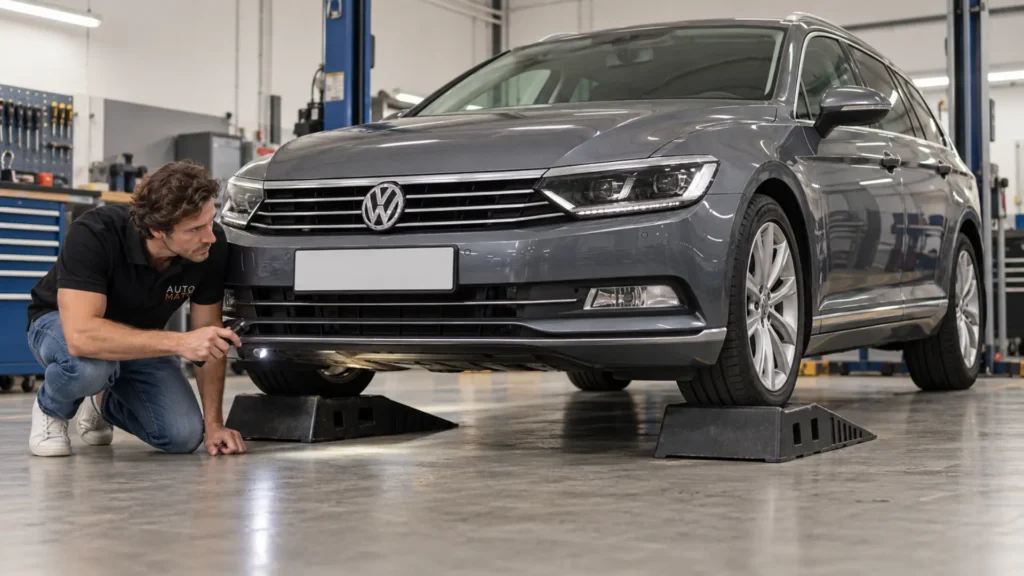
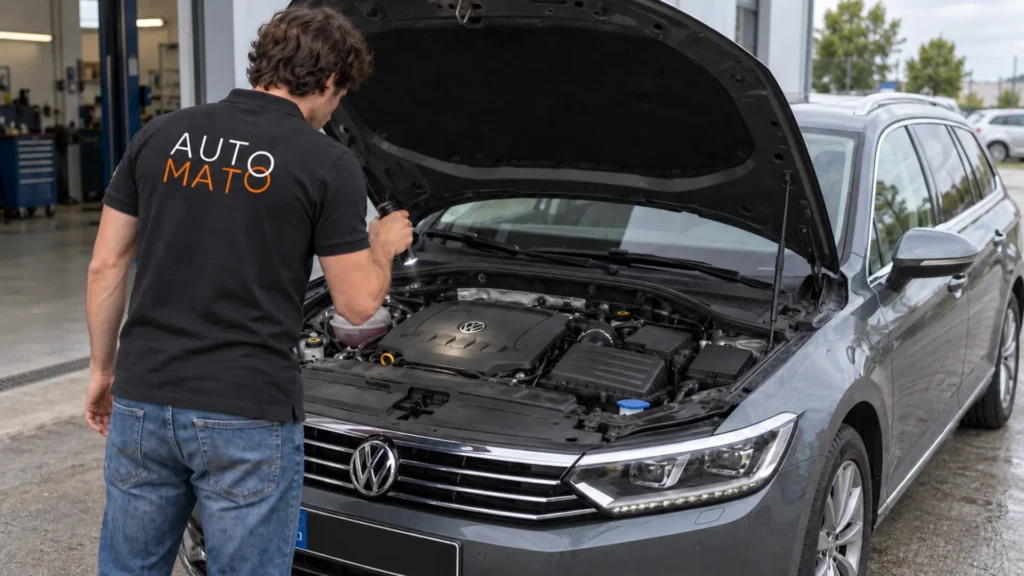
At Automato, when inspecting a car before buying it, we assess the car as a whole. The inspection also includes diagnostics and a test drive, if the seller allows them. You will receive the findings clearly in a report, including any limitations of the inspection.
Do you have a used car with DSG in mind? Have it inspected independently before you buy. You'll get a better idea of its condition and make your decision based on what you find, not just the ad.

Frequently asked questions
Is DSG jerking when starting off normal?
A slight noticeable pull when starting off does not necessarily mean there is a problem. It is important to distinguish between a subtle feeling of the clutch engaging and a significant jerk that moves the entire car. Repeated jerking, strong vibrations or unpredictable starts should not be ignored., especially if they occur even when you gently press the gas pedal.
During the test drive, try a few smooth starts, slow coasting and reversing. Pay attention to whether the problem recurs and how the car behaves at the beginning of the drive and after warming up. Don't just accept the dealer's explanation that "all automatics do this".
The cause may be inside or outside the gearbox, and jerking alone is not enough to determine a specific fault. If you have any doubts, Have the car independently inspected before buying.. A professional assessment will help determine whether this is a common symptom or a problem that deserves further investigation.
How often is the oil changed in a DSG?
The oil change interval depends on the specific type of transmission and the service schedule of the car. One interval does not apply to all DSG versions and cannot be reliably determined based on the number of speeds alone. Therefore, when verifying maintenance, use the exact identification of the gearbox and the manufacturer's instructions.
For a used car, ask not only whether the oil has been changed, but also when, at what mileage, and who performed the service. An invoice or a traceable service record that shows the extent of the work performed is ideal. The seller's mere statement that "the transmission has been serviced" does not provide enough information.
If documents are missing or the data contradicts, do not consider maintenance to be proven. Before buying, have the prescribed service and the condition of the gearbox checked. A documented oil change is important, but it does not in itself guarantee that the DSG is free of defects.
Is DSG 6 more reliable than DSG 7?
DSG gearbox in a used car? The number of gears alone is not enough to assess reliability. The designation DSG 6 and DSG 7 does not provide complete information about the design or service requirements of a particular gearbox. Therefore, it cannot be generally said that every six-speed DSG is better than a seven-speed, or vice versa.
When choosing a used car, it is important to find out the exact type of transmission, verify its maintenance and assess its current condition. Also, be interested in previous repairs and their documentation. The general reputation of a particular model can be a guide, but it is not a substitute for checking the specific car.
During the test drive, observe the smoothness of starts, gear changes, and behavior when reversing and moving slowly. Give more weight to the documented service history and the DSG 6 or DSG 7 designation itself. the result of an independent inspection. Even a gearbox with a good reputation is not a guarantee of a problem-free purchase if the piece has been neglected or is already showing problems.

DSG gearbox in a used car? What is the lifespan of a DSG gearbox?
A single mileage limit cannot be set for all DSGs. Mileage needs to be assessed together with maintenance, usage and inspection results.
Will diagnostics detect all DSG faults?
No. Diagnostics are an important part of the inspection, but they do not replace a test drive or further examination if problems arise.
Before buying a used car with a DSG gearbox don't forget about independent inspection. It can detect warning signs of a malfunction and save you from high repair costs.
If you are interested in how DSG works, check out explanation of the principle of the dual-clutch transmission directly from Volkswagen.