












The Škoda Kodiaq is one of the most sought-after family SUVs on the Czech market. It offers a huge interior, up to seven seats, a large trunk and a wide selection of engines. However, it is not cheap as a used car and a neglected model can require repairs worth tens of thousands of crowns shortly after purchase. So what is the Škoda Kodiaq as a used car?
Therefore, it is not only the engine that is most important. The previous use, the service of the transmission and 4×4 drive, the condition of the emission system for diesels, and the quality of any repairs after an accident are also decisive.

Is a used Skoda Kodiaq a good buy?
Yes, if you choose the right engine and you will thoroughly inspect the specific car. The first-generation Kodiaq is a practical, comfortable and, if serviced well, a solidly reliable family SUV. ADAC's statistics on its trips show problems with the automatic transmission in cars registered in 2018 and with the starter battery in several model years. However, this does not mean that every car will suffer from the same problem.
With a used car, the actual condition of the particular car is much more important than the general reputation of the model. The Kodiaq could drive long highway routes, but also tow a heavy trailer, carry seven people around the city, or only get serviced when the warning light came on.
Which engine is best for the Skoda Kodiaq?
| Engine | Who is it suitable for? | Main advantages | What to check before buying |
|---|---|---|---|
| 1.5 TSI 110 kW | City, shorter routes, lower annual mileage | Quiet operation, reasonable consumption, easier operation than diesel | Cold start, smoothness at low revs, DSG service |
| 2.0 TDI 110 kW | Universal use and longer routes | Plenty of power, good fuel consumption, wide range of used cars | DPF, EGR, SCR/AdBlue, injection and service history |
| 2.0 TDI 140/147 kW | Highway, 4×4, trailer and fully loaded car | Higher power and torque | Same points as the weaker diesel, plus 4×4 and DSG |
| 2.0 TSI 132/140 kW | Drivers who want petrol, performance and often 4×4 | Refined and powerful engine without diesel DPF/SCR | Cooling system, oil consumption, oil change frequency |
| RS 2.0 BiTDI 176 kW | Enthusiast willing to pay for higher service | Excellent dynamics and high torque | Two turbos, emissions, DSG, 4×4 and full service history |
| RS 2.0 TSI 180 kW | Powerful petrol variant after facelift | Dynamics, lower complexity than older BiTDI | Cooling circuit, DSG, 4×4, brakes and tires |
Skoda Kodiaq as a used car? The best all-rounder: 2.0 TDI 110 kW
For drivers who regularly drive longer distances, the 2.0 TDI with 110 kW is the most sensible choice. It has enough power even for a loaded car, consumption is acceptable and there is a wide selection on the market.
But diesel does not make sense for mainly short city trips. If the engine repeatedly does not complete the regeneration of the particulate filter, there may be problems with the DPF, EGR or SCR and AdBlue systems. During the inspection, it is not enough to check whether the indicator light is on. Diagnostics, DPF clogging values and error history are important.

Best petrol option: 1.5 TSI 110 kW
For smaller trips and a combination of city and country roads, the 1.5 TSI makes sense. It is quieter than a diesel and can be economical when driving calmly. However, the Kodiaq is a large and heavy car, so when fully loaded or towing a trailer, it does not have as much reserve as the two-liter engines.
During a cold test drive, look for jerking, hesitation when starting off, and smoothness at low revs. For a car with a DSG, try slow coasting, hill parking, and faster acceleration.
2.0 TSI: a good choice if you don't mind higher consumption
The two-liter gasoline engine is a very good match for the Kodiaq in terms of performance. It is suitable for drivers who do not drive enough kilometers on diesel, but want 4×4 and sufficient reserve. However, expect higher consumption, especially in the city.
Before buying, check the cooling system for leaks, signs of leakage around the water pump and thermostatic module, correct operating temperature, and regular engine oil changes.
What about the older 1.4 TSI?
The 1.4 TSI engine was offered in the first years of production with an output of 92 or 110 kW. The more powerful version may be interesting for a calm driver, especially with front-wheel drive. However, it works under greater load with a fully loaded car. Before buying, it is important to check the cold start, smooth running, the function of the ACT system and documented service.
The most common problems with a used Skoda Kodiaq
The following points are not automatically a defect in every Kodiaq. They are places that are worth checking more thoroughly when inspecting a used car.
1. DSG: jerking, lag and neglected oil
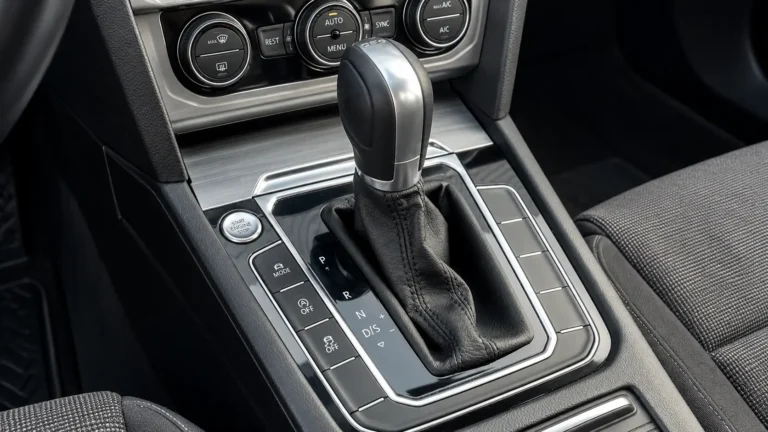
The DSG must shift smoothly when cold and when warmed up. Warning signs include a jolt when engaging D or R, a significant delay, vibrations when starting off, jerking in traffic or fluctuations in speed during acceleration.
Kodiaq used different gearboxes depending on the engine and year, so it is not possible to prescribe a single service interval for all cars. Check the VIN for the specific gearbox type and required oil changes. Do not simply accept the seller's claim that the oil in the DSG does not change.
2. 4×4 drive and interaxle clutch
For quad bikes, request documents on the maintenance of the interaxle clutch. Neglected oil, a dirty pump or unevenly worn tires can put unnecessary strain on the system. A used Škoda Kodiaq with 4×4 can therefore be more risky.
Check for leaks and condition of the cardan shaft on the jack. Listen for humming and vibrations while driving. Diagnostics should also check for errors in the all-wheel drive control unit.
3. DPF, EGR, AdBlue and NOx sensors
For diesels, focus on the entire emissions system, not just the DPF. Problems can be caused by the EGR valve, differential pressure sensors, NOx sensors, AdBlue dosing or the SCR system.
Suspicious are frequent fan operation after the engine is turned off, increased idling, smoke, irregular operation or recurring messages about the emission system. Diagnostics can show the history of faults and the status of regenerations.
4. Coolant leak
For petrol engines, pay attention to the water pump, thermostatic module and traces of dried coolant. A level below the minimum is not a detail that should be resolved by simply topping up.
The engine must reach operating temperature and then maintain it. Temperature fluctuations, a sweet smell in the engine compartment, or pink or white deposits require further inspection.

5. Electronics, infotainment and low battery
Try the infotainment, digital instrument cluster, all cameras, parking sensors, adaptive cruise control, Kessy, heating and electric boot lid. A weak battery can cause a number of seemingly unrelated error messages.
ADAC in its statistics For some Kodiaq models, it mentions the starter battery. Therefore, when diagnosing, check not only the stored errors, but also the voltage and condition of the battery.
6. Panoramic roof and leaks
If your car has a panoramic roof, check its smooth movement, seals and drainage channels. Look for moisture near the headliner, pillars, under the carpet and in the spare tire area.
Leaks can damage upholstery and electronics, so don't ignore the smell of damp or fogging windows.
7. Chassis, brakes and tires
The Kodiaq is a heavy SUV. For cars with a higher mileage, check the suspension clearance, stabilizer bars, silent blocks, wheel bearings, shock absorber condition and even tire wear.
Vibrations during braking can indicate warped discs. Different tires or significantly different tread depths on the axles are a problem, especially for 4×4s.
8. Electric trunk lid and small accessories
The electric lid must open and close without jerking or making any unusual noises. Also check the folding seats, the third row, the rear air conditioning, the trunk roller blind and the retractable door edge protectors, if the car is equipped with them.
Skoda Kodiaq as a used car? Before the facelift or after the facelift?
The modernized Kodiaq from 2021 received a modified appearance, newer technology and a changed engine range. The original diesel Kodiaq RS 2.0 BiTDI replaced the petrol 2.0 TSI with a power of 180 kW. The regular diesels after modernization offered 110 and 147 kW, the petrol engines 1.5 TSI 110 kW and 2.0 TSI 140 kW.
A facelift is not automatically more reliable just because it is younger. The advantage is usually a younger age and more modern equipment, the disadvantage is a higher purchase price and more complex emission technology. The specific piece always decides.

Kodiaq 4×4 or front-wheel drive?
Front-wheel drive is cheaper to service and is usually sufficient for normal family use. A four-wheel drive makes sense if you go to the mountains, tow a trailer, or regularly travel on unpaved roads.
But with 4×4s, there is an additional service item. Therefore, before buying, check the system function, maintenance of the all-wheel drive clutch, the condition of the cardan shaft and the matching tires on all wheels.
What to look for when exploring Kodiak
- Cold start: The engine must start without long revving, knocking, smoke and speed fluctuations.
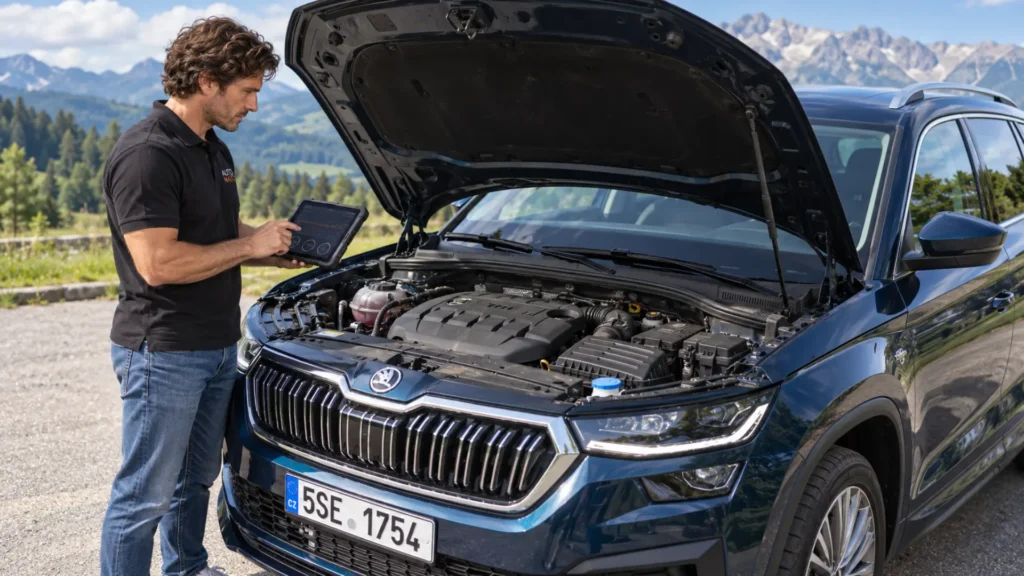
- Diagnostics: Clearing the warning lights is not enough. Check the fault memory, DPF, SCR, gearbox, 4×4 and battery status.
- DSG: Try starting off, coasting, reversing uphill and accelerating harder.
- Body: Measure the paint, check the supporting parts, joints, welds and dates on the glass.
- Chassis: Play and leaks are best detected on a jack; listen for knocks and hums while driving.
- Gear: Test every button, camera, sensor, air conditioning, seat and trunk lid.
- Service history: Invoices are worth more than just a stamp in a service book.
- Calling event: Check with an authorized service center using the VIN to see if all required campaigns have been completed.
Which Kodiaqs would we rather avoid?
Skoda Kodiaq as a used car with history? Be careful with cars without a documented history, after a major accident, with an unclear origin or with significantly different wear compared to the stated mileage. Also risky are diesels used exclusively for short distances, quad bikes without a single record of drive service and DSGs that jerk during a test drive.
For the RS 2.0 BiTDI, demand an extremely thorough history. It's not necessarily a bad engine, but two turbos, a powerful diesel, DSG and 4×4 make for an expensive combination when the previous owner neglected maintenance.
Frequently asked questions
Is the Kodiaq 1.5 TSI or 2.0 TDI better?
For shorter routes and lower annual mileage, the 1.5 TSI is more suitable. For regular highway driving, high mileage and towing a trailer, the 2.0 TDI makes more sense.

Is the Skoda Kodiaq reliable?
With proper service, yes. The greatest risk is posed by neglected models, which include worn DSGs, poorly maintained 4×4 drives, and problems with the diesel emission system.
How many seats does the Skoda Kodiaq have?
The Kodiaq was sold as a five-seater and a seven-seater. The third row is mainly suitable for children or shorter trips. For the seven-seater version, check the folding mechanism and the condition of the belts and upholstery.
Does it make sense to buy a Kodiaq without 4×4?
Yes. Unless you regularly drive in the mountains, off-road, or with a heavy trailer, front-wheel drive tends to be a cheaper and easier option.
Is the Kodiaq better before or after the facelift?
A facelift offers younger cars and more modern technology, but it usually costs more. A well-maintained pre-facelift car can be a better buy than a neglected younger car.
Verdict: a good Kodiaq is chosen based on condition, not just the engine
The Skoda Kodiaq can be an excellent family car. We consider the 2.0 TDI 110 kW to be the best universal diesel, the 1.5 TSI makes sense for lower mileage, and the 2.0 TSI is interesting for those interested in a powerful petrol and 4×4.
Even the recommended engine will not save a car with neglected service, a twisted speedometer or a poorly repaired accident. Therefore, before buying, have the history, diagnostics, paint, chassis, transmission and all-wheel drive checked. One thorough inspection can reveal defects that you can easily overlook during a short drive.
Before you pay for a used Kodiaq, have it independently inspected by a technician.